
 sales@ant-filter.com


 Home
HomeKey Considerations in Automotive Cabin Air Filter Manufacturing
 Mar 24,2026

 admin
admin
Producing automotive cabin air filters is a highly specialized process involving multiple dimensions such as regulations, materials, processes, and quality control**. The following table summarizes the core details for each key stage:
Key Stage | Core Considerations & Detailed Requirements
Regulations & Standards &Compliance is the baseline: China's mandatory automotive industry standard "Automotive Air Conditioning Filter" has been implemented since July 1, 2024, and must be strictly followed. This standard covers classification, technical requirements, test methods, and inspection rules.
Raw Material Selection
Performance determines materials: Base Filter Media: Commonly used non-woven fabrics include melt-blown polypropylene, glass fiber, etc. For applications as a support skeleton, stiffness and moldability are crucial to ensure successful pleating. Functional Materials: Add materials like activated carbon (requiring uniform distribution), antibacterial agents(targeting ≥90% bacteriostatic rate), and electret materials (enhancing electrostatic adsorption of particles) to achieve multi-functionality. |
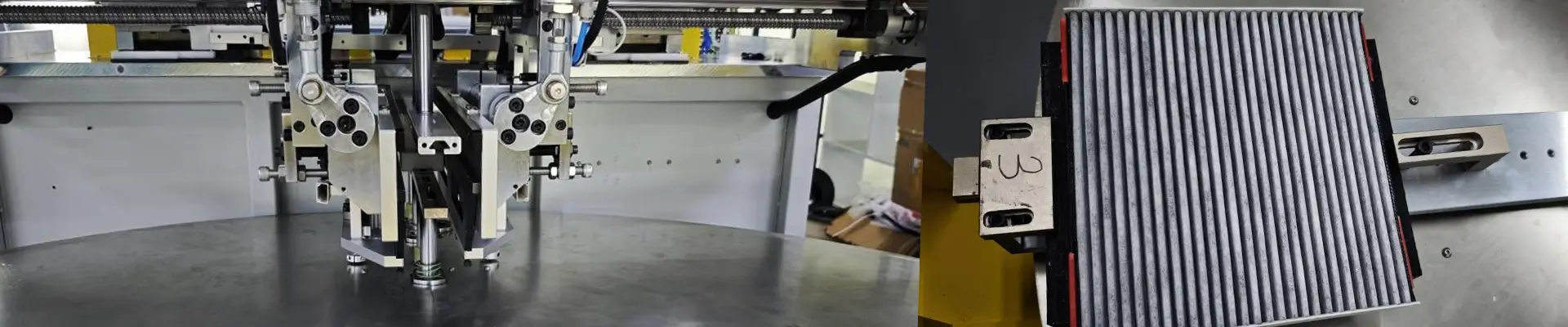
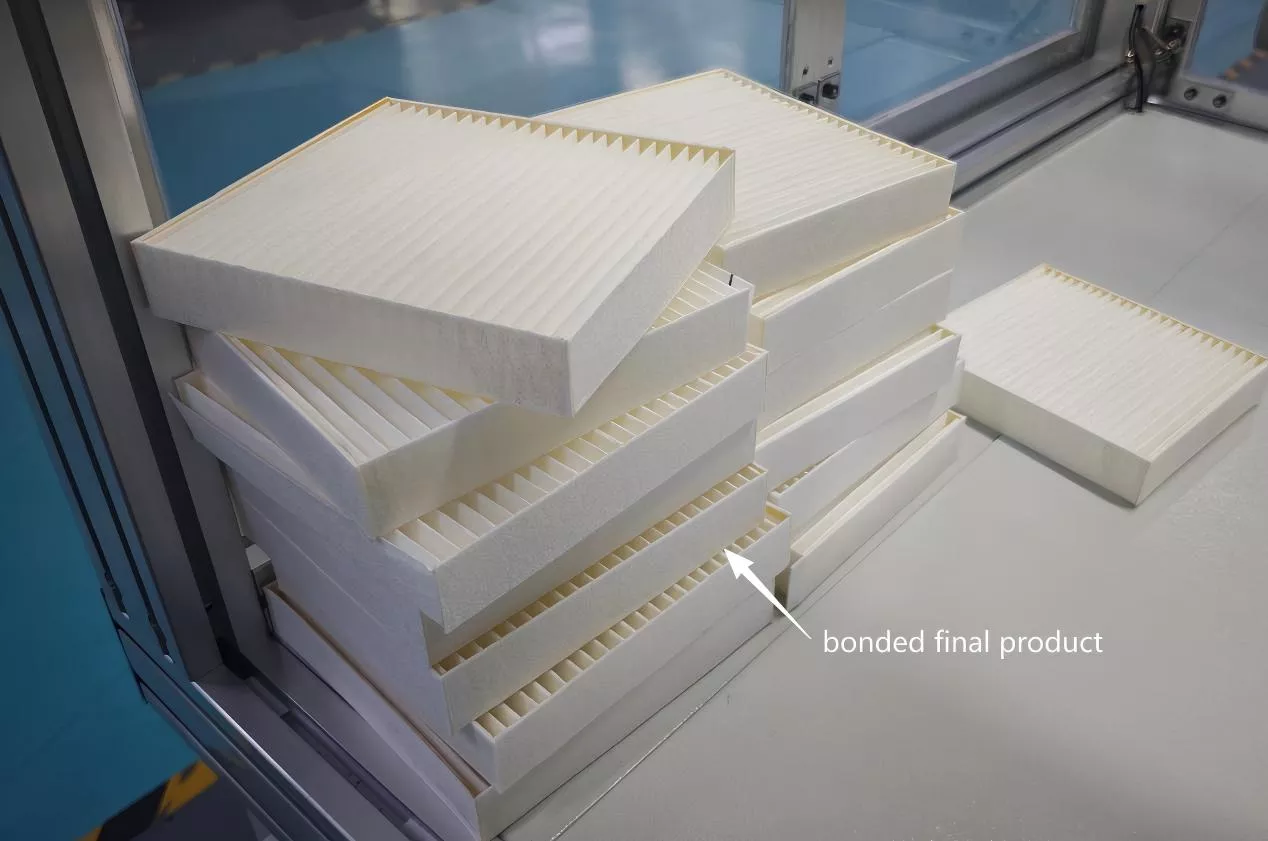
Process & Production Control ,Precision and consistency are key,Activated Carbon Combination: Control the precise dosing, uniform distribution, and fixation process of carbon powder to avoid accumulation or dispersion. Adhesive-free combination is an advanced direction, reducing airflow resistance and improving electret effect. Pleating (Folding): Precisely control ,pleat height and pitch. Pre-setting heat embossing or applying stiffness finishing to the material can enhance pleat uniformity and retention. Edge Sealing & Curing: Ensure edges are securely sealed without leaks. Use appropriate heat-press temperature (e.g., 200-230°C) and duration for curing.
Quality Control & TestingValidate performance with data: Finished products must undergo strict testing according to standards. Core metrics include: <br>• Filtration Efficiency: Initial efficiency for particles like PM2.5 (e.g., ≥95%@0.3μm). Airflow Resistance: Pressure drop at rated airflow (e.g., ≤50Pa), directly impacting AC energy consumption and airflow. Dust Holding Capacity: A key indicator of filter lifespan, referring to the amount of dust the filter can hold before reaching its terminal resistance. Functional Performance: Such as antibacterial rate, VOC (e.g., formaldehyde) adsorption rate, and structural integrity (resistance to temperature and humidity). |
Additional Strategic Recommendations
- Focus on Technological Frontiers: R&D can explore directions like high-efficiency, low-resistance materials (e.g., nanofibers), adhesive-free combination, smart sensing (e.g., integrated sensors), and eco-friendly, biodegradable materials.
- Align with Market Demand: Based on our previous discussion of market distribution, tailor R&D for different regions: The North American/European market values high-standard certifications (HEPA grade) and environmental friendliness; the Chinese market has strong demand for cost-effective, high-efficiency filtration (e.g., anti-PM2.5) and antibacterial functionality.
Summary
Manufacturing automotive cabin air filters requires meticulous, full-process control under the framework of the mandatory industry standard (QC/T 998-2023), spanning from base materials, combination processes, and precision forming to stringent performance testing. Oversights in any stage can affect the final filtration efficiency, service life, and driving safety.
 How to Select a High-Quality Automotive Cabin Air Filter Production Line Manufacturer in China
 You May Also Like


 Tel
Tel
 Email
Email
 Address
3rd Floor, Industrial Park, No. 9-28, Haibang Village, Haiyong Road, Panyu District, Guangzhou City, Guangdong Province, China

Sales
 Whatsapp


 INQUIRY FOR DETAILS
