
 sales@ant-filter.com


 Home
HomeWhat are the painpoints for the making automotive cabin air filter ?
 Mar 24,2026

 admin
admin
Manufacturing automotive cabin air filters comes with a mix of technical, operational, cost, and regulatory pain points. Below is a structured breakdown across the full value chain—from materials to production to market pressures—so you can see where manufacturers most commonly struggle.
1. Raw Materials & Supply Chain Pain Points
a. Filter Media Availability & Cost
Nonwoven fabrics (PP, PET, meltblown) are subject to price volatility tied to petrochemicals.
Activated carbon quality varies significantly by supplier, affecting odor adsorption and VOC removal.
Premium media (anti-bacterial, HEPA-like, electrostatic) is often import-dependent, increasing lead times and currency risk.
b. Consistency & Quality Variations
Inconsistent fiber diameter, basis weight, or carbon loading can lead to:
Uneven airflow resistance
Reduced filtration efficiency
Higher rejection rates during QA
2. Design & Engineering Challenges
a. Balancing Filtration vs. Airflow
One of the biggest pain points:
High filtration efficiency → higher pressure drop
Low pressure drop → reduced particle capture
OEMs demand low noise, low energy loss, and high comfort simultaneously.
b. Fitment Complexity
Thousands of vehicle models → SKU explosion
Tight HVAC housings require:
Precise dimensional tolerances
Complex frame geometries
Poor fit leads to air bypass and customer complaints.
c. Multi-Layer Integration
Combining layers (particle + carbon + anti-microbial) creates:
Delamination risks
Adhesive compatibility issues
Thickness constraints
3. Manufacturing & Process Pain Points
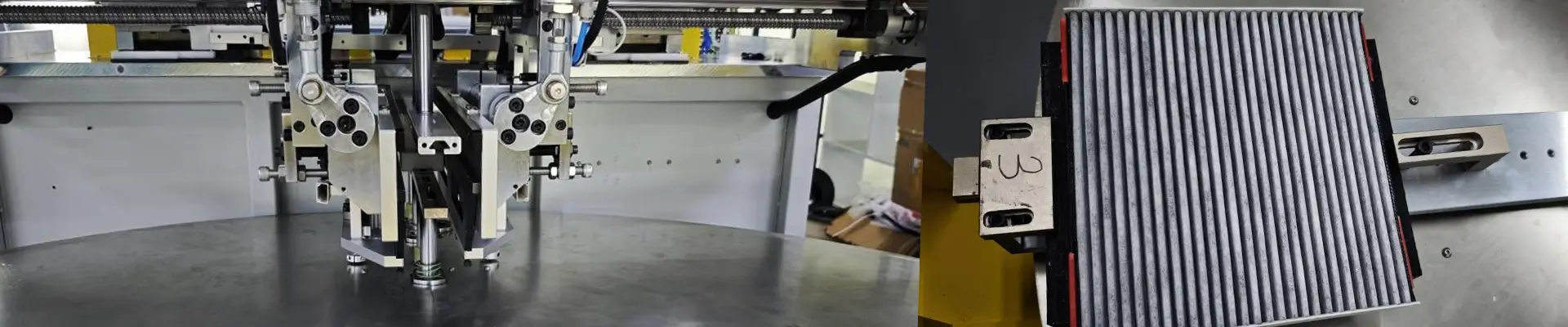
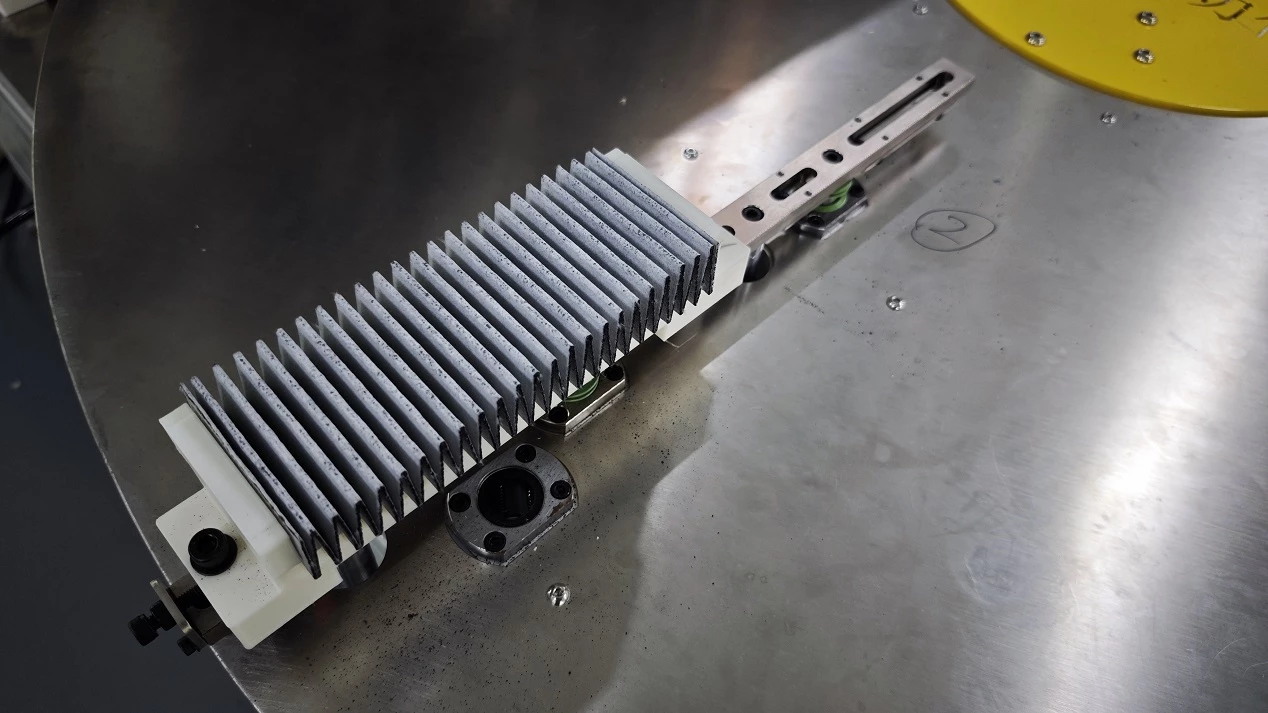
a. Pleating & Forming Issues
Pleat deformation or collapse during high-speed pleating
Maintaining uniform pleat depth and spacing
Carbon-loaded media is brittle and prone to cracking
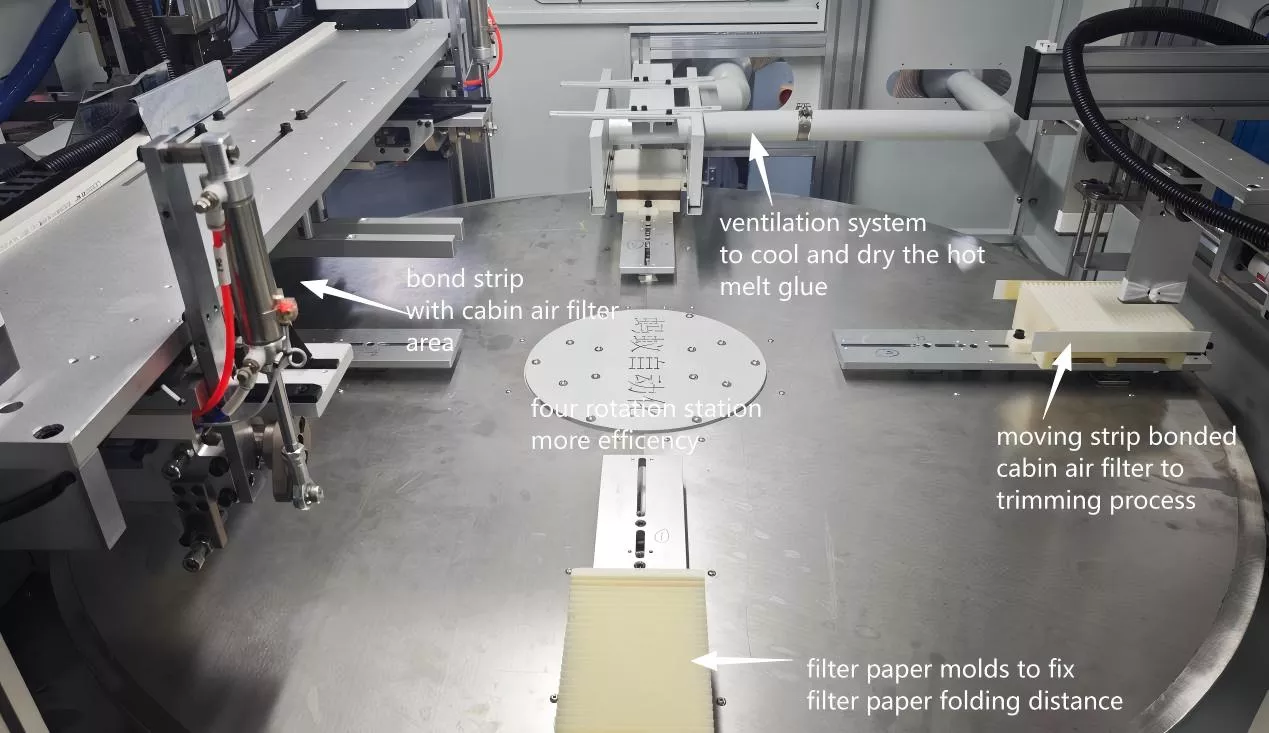
b. Adhesive & Sealing Problems
Adhesive curing time slows down cycle time
Inconsistent glue beads cause:
Media leaks
Frame separation
OEMs increasingly demand low-VOC or solvent-free adhesives, which are harder to process.
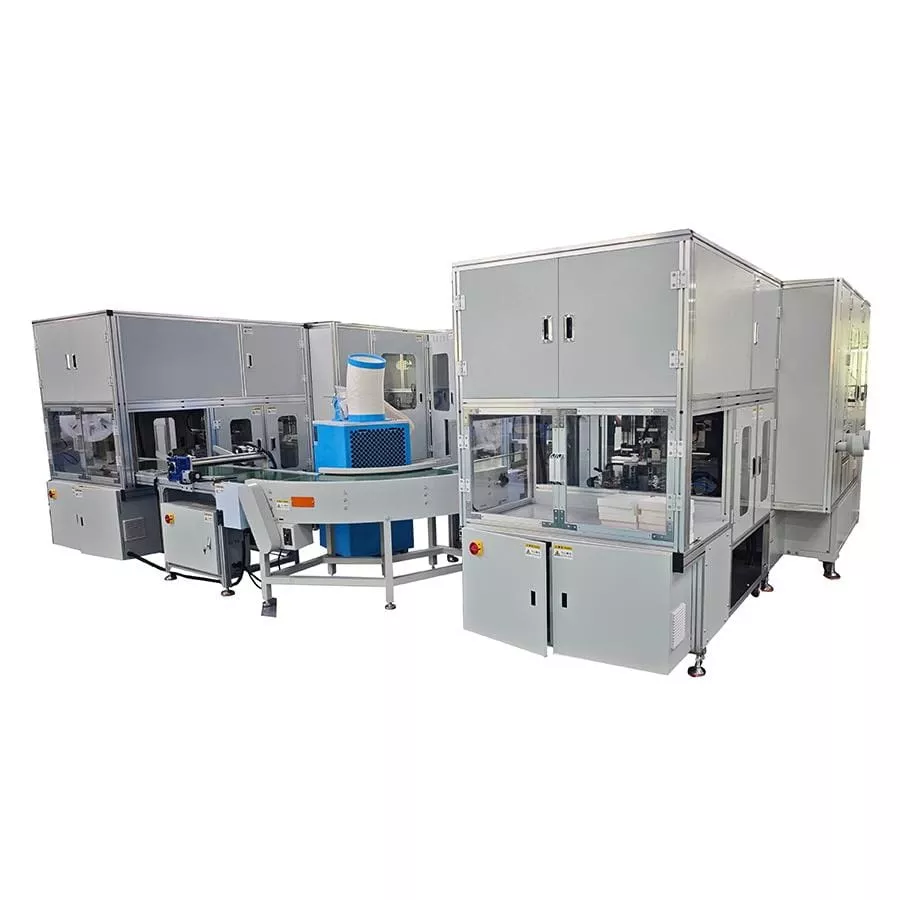
c. Automation vs. Labor
High automation requires heavy upfront CapEx
Manual assembly leads to:
Variability in quality
Higher defect rates
Skilled labor shortages in some regions add pressure.
4. Quality Control & Testing Challenges
a. Filtration Performance Testing
Real-time testing for:
PM2.5
Pollen
Odors & gases (NOx, SO₂)
Test equipment is expensive and slow, limiting throughput.
b. Leak & Bypass Detection
Small sealing defects are hard to detect visually.
Air bypass drastically reduces real-world performance but often passes basic tests.
c. Durability & Aging
Filters must withstand:High humidity,Temperature cycling,Vibration
Carbon efficiency degrades over time, hard to predict accurately.
5. Regulatory & OEM Compliance Pain Points
a. OEM-Specific Standards
Each OEM has its own specs (VW, Toyota, Hyundai, etc.).
Requires:Repeated validation
Frequent retooling
High documentation burden
b. Emissions & Indoor Air Quality Regulations
Growing focus on in-cabin PM2.5, allergens, VOCs.
Future standards are uncertain, increasing R&D risk.
6. Cost & Margin Pressures
a. Price Sensitivity
Cabin air filters are often viewed as a commodity.
Strong price pressure from:OEM purchasing departments,Aftermarket private labels
b. High Scrap Rates
Media defects, mis-pleating, or frame mismatch increase waste.
Carbon media scrap is especially expensive.
c. Logistics & Inventory
High SKU count → inventory carrying costs
Filters are bulky but low-value, increasing transportation cost per unit.
7. Aftermarket-Specific Pain Points
a. Counterfeit & Low-Cost Competition
Low-quality imports undercut pricing.
Difficult for consumers to perceive performance differences.
b. Consumer Education
Customers often:
Replace filters too late
Choose cheapest option
Makes it hard to justify premium filters (HEPA, carbon, anti-viral).
8. Sustainability & Future Challenges
a. Recyclability
Multi-material construction (media + plastic frame + glue) is hard to recycle.
OEMs are pushing for mono-material or bio-based solutions.
b. ESG & Carbon Footprint
Pressure to reduce:
Plastic usage
Energy consumption
Carbon intensity of materials
Summary: Top Pain Points at a Glance
| Area | Key Pain Point |
| Materials | Cost volatility, quality inconsistency |
| Design | Filtration vs airflow trade-off |
| Production | Pleating, sealing, automation cost |
| Quality | Leak detection, performance validation |
| Compliance | OEM-specific standards |
| Cost | Margin pressure, scrap |
| Market | Commoditization, low differentiation |
| Sustainability | Recycling & ESG compliance |
 Automotive Cabin Air Filter Market Trends 2025–2030: Growth, Innovation & Key Industry Shifts
 You May Also Like


 Tel
Tel
 Email
Email
 Address
3rd Floor, Industrial Park, No. 9-28, Haibang Village, Haiyong Road, Panyu District, Guangzhou City, Guangdong Province, China

Sales
 Whatsapp


 INQUIRY FOR DETAILS
